
Showing posts with label UNICEF. Show all posts
Showing posts with label UNICEF. Show all posts
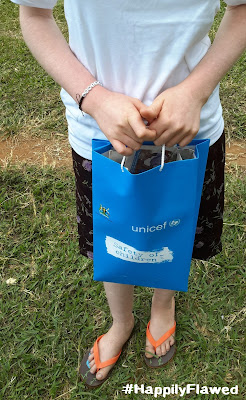

I met Paulina* about two weeks ago in Masaka on International Day of theAfrican Child.
It’s her bravery that stayed with me.
She is in her mid teen years but she’s already fought tough
battles none of us will ever dream of, nor understand, and yet she’s not shy
about speaking up for what she believes in.
When people stand up for what is right, despite the
disapproval of others, I admire them. As we get older it tougher for adults to
do. To survive in the adult world you must be part of the social
circle and adher to the subtle rules. The ones that step outside may become
GREAT, but the socials risks involved will deter many, therefore it is rarely
encouraged.
Let’s get back to story….
We arrived at Hotel Brovad in Masaka around 9.40am. My colleagues
and I were late. We had missed most of the children’s roundtable discussion
with Government representatives.
In the last 30 minutes the MC asked the children, “Children,
does anyone have anything else to say to the adults?”
After three or four children had spoken, up went Paulina, given
her skin you really couldn’t help noticing her, grabbing the mic she
confidently stated. “Children like me want to be treated like everyone else, we
can run, we jump, we can play. We shouldn’t be left out. The Government should
consider us too!”
Shortly afterwards the discussion concluded, but I was
curious about her story and what had prompted her to speak out so loudly and assertively.
We all made our way to the grounds where
the celebrations would continue, I sought out the MC of the roundtable
discussion to see if I could learn more about Paulina.
When I found her, she agreed to share some of her story. Because
she’s a minor I have changed her name and used a picture without her face.
Paulina says her eyesight is a problem, she’s been out of
school for a year so that she could get a special operation. The operation
helped, but she still has sight problems because in school when it rains her
classroom becomes dark and she can’t see the board. When I asked if she had
electricity in school, she said they did, but her classroom’s light wasn’t
working and they had neglected to fix it.
“ Other classrooms have light.” She said
Paulina told me that children like her have to put special ointment
on their skin but not everyone can afford it. These are the things she wants
the government to consider supporting.
“They make huge difference in a child’s life.” She said.
She told me she is brave because she comes from a
loving family , that’s why she can speak up for herself,
“Many children like me don’t come from a good family. School
is difficult if your teachers don’t understand. They are scared to be
themselves, to be free. I want to be a human rights lawyer when I grow up, so
that I can speak for children like me.” She told me.
That is what this blog #HappilyFlawed is about. It’s about
being comfortable in your own skin, no pun intended, and sharing your life
lessons with others. It’s about accepting that we can’t be perfect and there is
no need to be. We should just happily be ourselves.
Thank for sharing Paulina! #BraveGirls #HappilyFlawed
Albinism is a rare,
genetically inherited condition found in all ethnicities. People with albinism
have little or no pigmentation in their eyes, hair and skin owing to a lack of
melanin. They are sensitive to bright light and have a higher than average risk
of skin cancer from sun exposure. Most people with albinism are also visually
impaired. To find out more about Albinism click here

There has been a lot of talk about #refugees in the media lately, so it shouldn't really come as a big surprise to learn that we visited a refugee settlement during the #InvestInUGchildren media tour. #Uganda hosts over 130,000 refugees in the districts of #Adjumani, #Arua, #Koboko, #Yumbe and #Kiryandongo. 85% are women and children, and it is well known that these are the most vulnerable groups when it comes to conflict and war. The #Kiryandongo refugee settlement has 45,000 refugees from South Sudan, Kenya and Rwanda. We spent some time at Panyadoli child friendly space, and although, it was pouring with rain the community showed up, excited to meet these visitors from UNICEF and share their stories with key media houses. 1215 children can access this one space. In fact some of these children learn how to read and write for the first time in this special space. It's actually the perfect place for staff to carry out psych-social assessments of the children and see whether they require any additional needs, as result of the trauma they have experienced. My favorite part was when one boy proudly stood up to show our Chief of Communications how well he could read, and all the women around him cheered him on as though all of them were his mothers. No matter what is happening in life, Children should always be allowed to be children, and it's great that spaces like this remind children to play, have fun and be curious. #InvestInUGchildren
 |
| (Photo Credit: UNICEF Uganda) |

I wrote this on the 5th December 2015 during the UNICEF Uganda Media Tour
It's a humid Saturday morning when we arrive at Bondo Health center in our air-conditioned land rovers to have a meeting with health workers, teenage mothers and community members. I enter the stuffy metal tin roofed meeting room a little late, and find everyone settled on concrete benches. All eyes are on a young pregnant woman in the corner, I realise as the discussion is going on that she is not really a full grown adult woman, she is a pregnant teenage girl. Her hands are shaking she can barely get a word out of her mouth. Her eyes keep darting around the room looking for help. Anyone would feel nervous too, imagine sitting in a room full of strangers while they ask you, "How could you allow yourself to get pregnant?" "Will you be returning to school once you've had the baby?" It must be too overwhelming for a young girl like her, I doubt she ever considered the consequences of her pregnancy. We continue to ask our questions as though we understand (with our NGO jargon) what it means to be a girl like her. We ask our questions as though opportunities in this area are growing and falling off trees like unwanted over-ripe mangoes. At first she refuses to answer the questions and others decide to answer for her, They say "Her father died, Her mother went mad, there is nobody to guide her....." Finally my boss asks, " What happened to the man who made her pregnant?" There is some mumbling among the participants which dies down immediately and then the question is forgotten, and silence returns. Again my boss insists, "What happened to the man who made her pregnant?" To which there is silence until one brave middle-aged man stands up and says, "You see if she lived closer to me I would have advised her like a daughter to stay away from men, but the children of these days they are different. What can we do?" He shrugs his shoulders and sits down. He seems proud of himself thinking he has said what the NGOs want him to say. But they have still failed to answer the question. This man who impregnated her has quite simply and quickly been absolved of all responsibility. By now the young girl has already made her way to the back the room. Now unrecognizable among the crowd, she can relax and let them talk as though she isn't there. Eventually my boss asks another question, "What would the women in this community like to see happen so that girls are better protected from defilement?" He kindly gestures towards the women in the room as he talks to the translator. First there is silence, except for the children playing outside. My boss asks his question again and some smiles appear on the women's faces. Can you imagine a man actually ignoring what the men have said and now seeking their opinion? Then finally one among many is brave enough to stand up and say, "Here we have no voice. In our community it is the men who make all the decisions. Even if it is our hardwork that brings in the income, it makes no difference, for it is the men who decide how to spend the money, some days you can even fight with your husband to pay school fees for your children." #Arua #InvestInUGchildren

It's a humid Saturday morning when we arrive at Bondo Health center in our air-conditioned land rovers to have a meeting with health workers, teenage mothers and community members. I enter the stuffy metal tin roofed meeting room a little late, and find everyone settled on concrete benches. All eyes are on a young pregnant woman in the corner, I realise as the discussion is going on that she is not really a full grown adult woman, she is a pregnant teenage girl. Her hands are shaking she can barely get a word out of her mouth. Her eyes keep darting around the room looking for help. Anyone would feel nervous too, imagine sitting in a room full of strangers while they ask you, "How could you allow yourself to get pregnant?" "Will you be returning to school once you've had the baby?" It must be too overwhelming for a young girl like her, I doubt she ever considered the consequences of her pregnancy. We continue to ask our questions as though we understand (with our NGO jargon) what it means to be a girl like her. We ask our questions as though opportunities in this area are growing and falling off trees like unwanted over-ripe mangoes. At first she refuses to answer the questions and others decide to answer for her, They say "Her father died, Her mother went mad, there is nobody to guide her....." Finally my boss asks, " What happened to the man who made her pregnant?" There is some mumbling among the participants which dies down immediately and then the question is forgotten, and silence returns. Again my boss insists, "What happened to the man who made her pregnant?" To which there is silence until one brave middle-aged man stands up and says, "You see if she lived closer to me I would have advised her like a daughter to stay away from men, but the children of these days they are different. What can we do?" He shrugs his shoulders and sits down. He seems proud of himself thinking he has said what the NGOs want him to say. But they have still failed to answer the question. This man who impregnated her has quite simply and quickly been absolved of all responsibility. By now the young girl has already made her way to the back the room. Now unrecognizable among the crowd, she can relax and let them talk as though she isn't there. Eventually my boss asks another question, "What would the women in this community like to see happen so that girls are better protected from defilement?" He kindly gestures towards the women in the room as he talks to the translator. First there is silence, except for the children playing outside. My boss asks his question again and some smiles appear on the women's faces. Can you imagine a man actually ignoring what the men have said and now seeking their opinion? Then finally one among many is brave enough to stand up and say, "Here we have no voice. In our community it is the men who make all the decisions. Even if it is our hardwork that brings in the income, it makes no difference, for it is the men who decide how to spend the money, some days you can even fight with your husband to pay school fees for your children." #Arua #InvestInUGchildren


I wrote this on the 4th December 2015, during UNICEF Uganda Media Tour
Yesterday I learnt that people can use courtship, rape and girl child in the same sentence and not flinch. Courtship rape is when a girl as young as 12 years old is chased down by a group of men and raped by the one who wants to marry her. I learnt that a girl's very own family can shame her for not being strong enough to fight off these men. A lot of good work is being done to change harmful practices against women and girls in #Uganda. Through this, I hope we can be the generation that leaves a legacy of protecting the girl child. Rape should never equal marriage. No girl should ever feel ashamed for something she had no control over. #EndChildMarriage #InvestInUGchildren


Subscribe to:
Posts (Atom)



Social Icons